ELDERS Lab
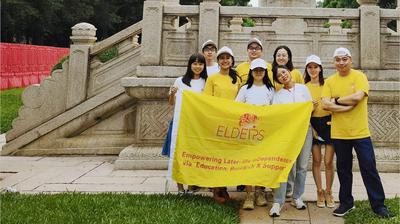
ELDERS focus on identifying the psychosocial and behavioral determinants of healthy aging, developing community-based health management models for the elderly, and conducting comparative studies on global healthy aging initiatives and management frameworks.
Research
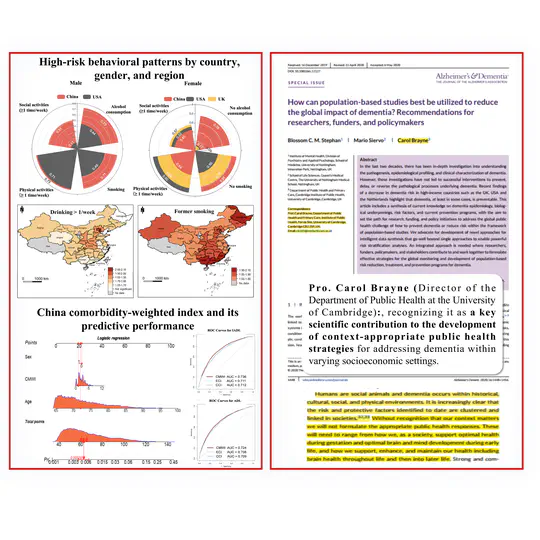
Develop culturally adapted dementia risk indicators via digital technology-based phenotyping (e.g. wearable sensors, voice analytics) and longitudinal data analysis of spatiotemporal lifestyle patterns across global ageing cohorts, enabling precision identification of high-risk elderly in community settings.
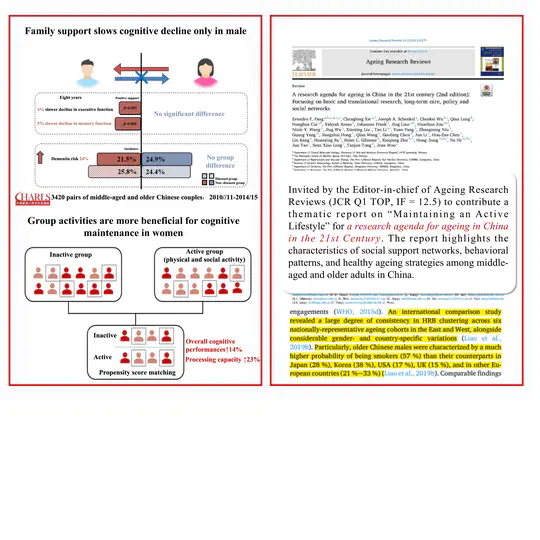
Elucidate gender-specific social support mechanisms using dyadic/social network analysis, and design targeted interventions through behavioral economic nudges to enhance cognitive resilience via community networks.
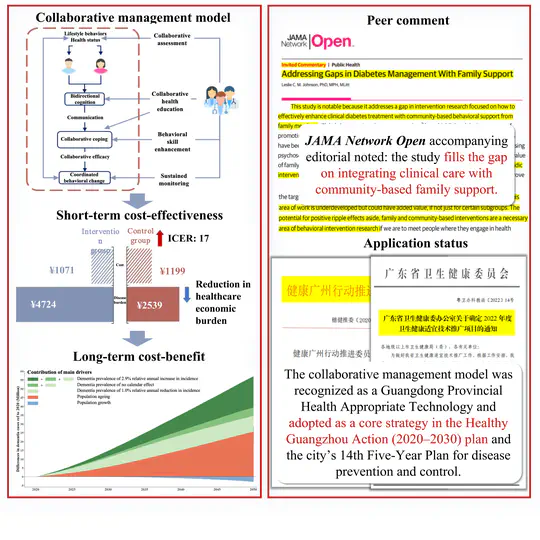
Establish a “physician-patient-family” triadic model via implementation science frameworks, with cost-effectiveness analysis via Markov modeling to quantify long-term benefits of integrated chronic disease-cognitive care in community settings.
Latest Articles
Latest News
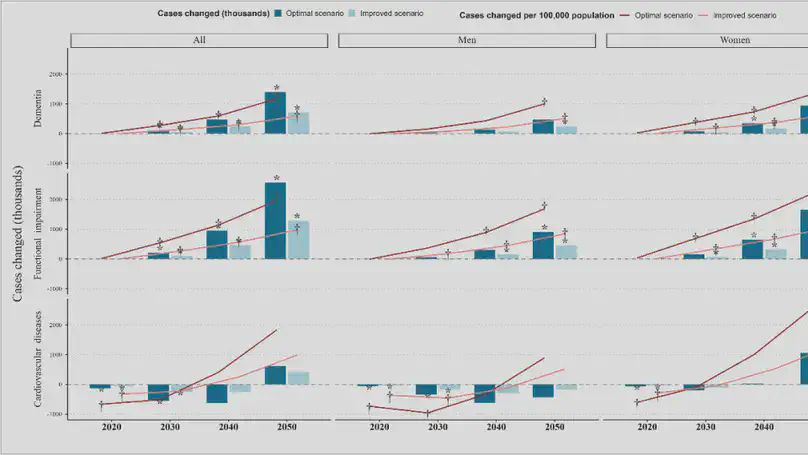
2026年2月24日,国际顶级学术期刊Nature刊发头条文章 “China is waging war on Alzheimer’s. What can its approach teach the rest of the world?”,聚焦中国在阿尔茨海默病(AD)防治领域的战略布局与科研突破。文章指出,面对人口老龄化带来的日益严峻的疾病负担,中国通过系统性推进资金投入、人才集聚、临床研究体系建设及自主药物研发,已形成具有全球借鉴意义的实践路径。报道援引英国科学家John Hardy的评价称:“也许中国会成为下一个领跑者。” 值得留意的是,该报道也引用了本课题组周榆敬同学的文章,作为阿尔兹海默症及其他痴呆症的未来患病人数预测的依据(文章链接)。无论诊断率上升、不变、或下降,到2050年中国将会有1000万病例数。