ELDERS Lab
ELDERS focus on identifying the psychosocial and behavioral determinants of healthy aging, developing community-based health management models for the elderly, and conducting comparative studies on global healthy aging initiatives and management frameworks.
Research
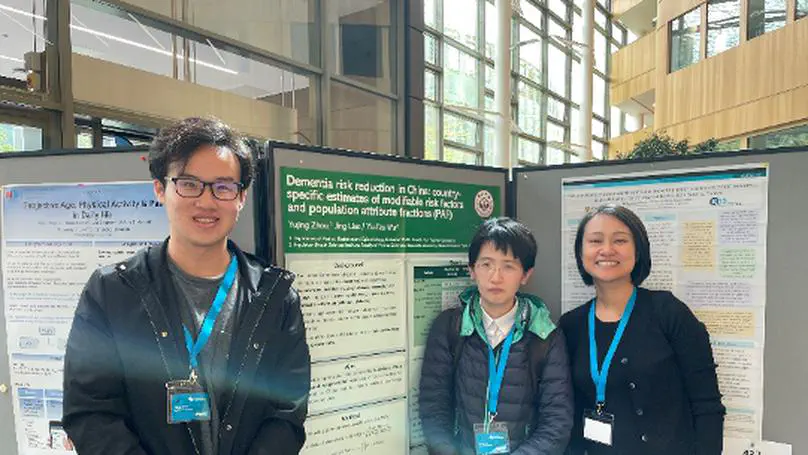
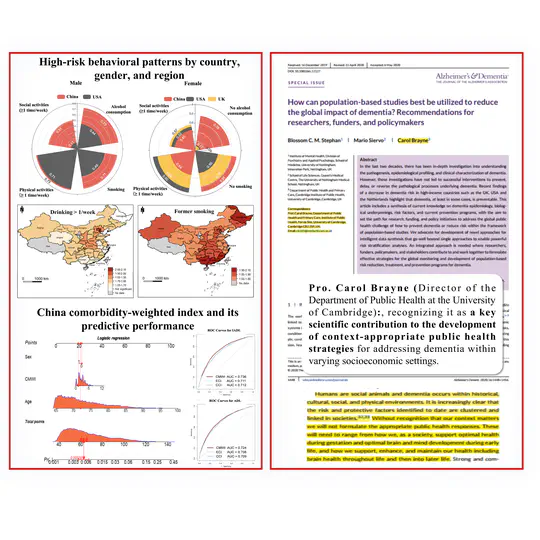
Develop culturally adapted dementia risk indicators via digital technology-based phenotyping (e.g. wearable sensors, voice analytics) and longitudinal data analysis of spatiotemporal lifestyle patterns across global ageing cohorts, enabling precision identification of high-risk elderly in community settings.
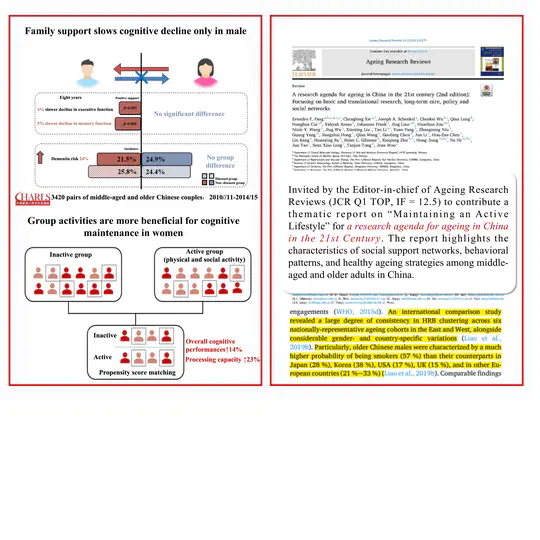
Elucidate gender-specific social support mechanisms using dyadic/social network analysis, and design targeted interventions through behavioral economic nudges to enhance cognitive resilience via community networks.
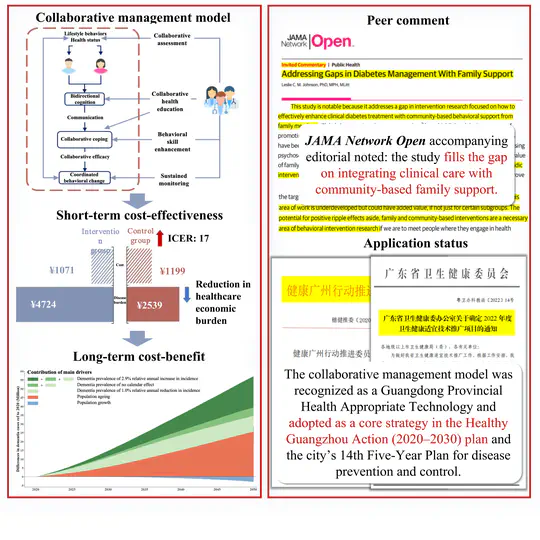
Establish a “physician-patient-family” triadic model via implementation science frameworks, with cost-effectiveness analysis via Markov modeling to quantify long-term benefits of integrated chronic disease-cognitive care in community settings.